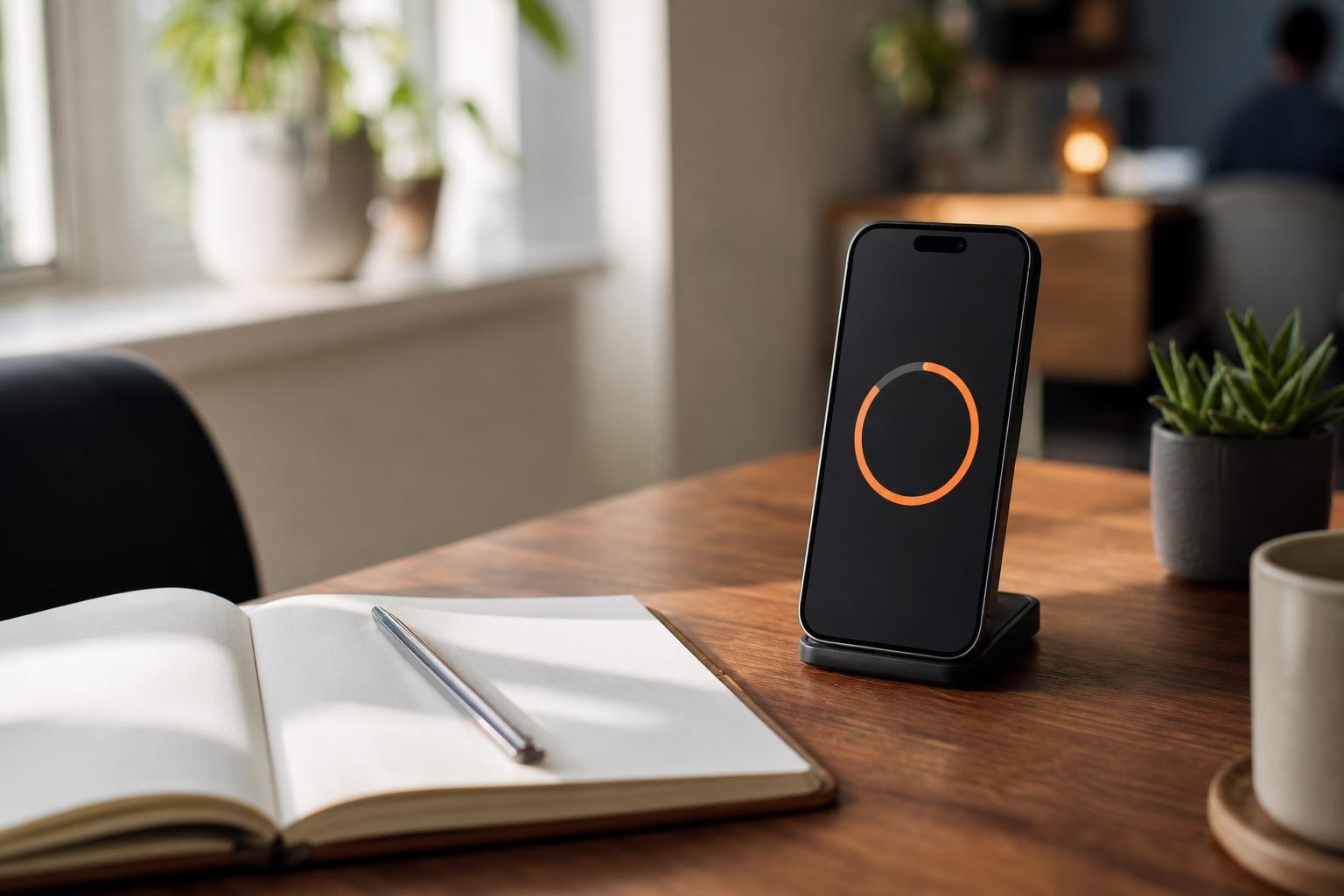
The best adhd focus timer app turns an abstract feeling of time into a clear, visible physical anchor so you can initiate tasks without overwhelm. Standard alarms often fail neurodivergent brains because they demand manual calculations and break attention with noisy alerts. Choosing a dedicated tool externalizes the passing minutes, reduces digital friction, and helps you protect focus across your workdays.
Understanding Time Blindness and Executive Dysfunction
Navigating daily deadlines with attention-deficit/hyperactivity disorder often involves dealing with what researchers term time blindness. Based on late 2023 survey data, approximately 6.0% of U.S. adults—or an estimated 15.5 million people—had a current ADHD diagnosis. Furthermore, more than half of adults with an ADHD diagnosis received their diagnosis in adulthood at age 18 or older, often discovering that lifelong productivity hurdles stem from differences in executive functioning rather than a lack of willpower.
A 2019 meta-analysis published in Neuropsychology Review confirmed that time perception deficits are among the most robust cognitive findings in ADHD research. Clinical psychologist Dr. Russell Barkley conceptualized ADHD as a disorder of executive functioning that causes "time blindness" or "temporal myopia," where the brain primarily processes time as "now" versus "not now". When future hours do not feel real until a crisis arrives, estimating how long a task will take becomes very difficult.
To manage this disconnect, Barkley's ADHD clinical framework recommends externalizing time through visible timers, clocks, and structured intervals to compensate for deficits in internal temporal tracking. When you can see time moving at a glance, the mental burden of tracking the day shifts from your working memory to your environment.
Why Standard Productivity Timers Fail ADHD Minds
Most default countdown tools are built around rigid, artificial systems. They often force you to stop working right when hyperfocus finally sets in, or they require multiple configuration steps just to log a short sprint. This friction creates executive fatigue before you even begin working.
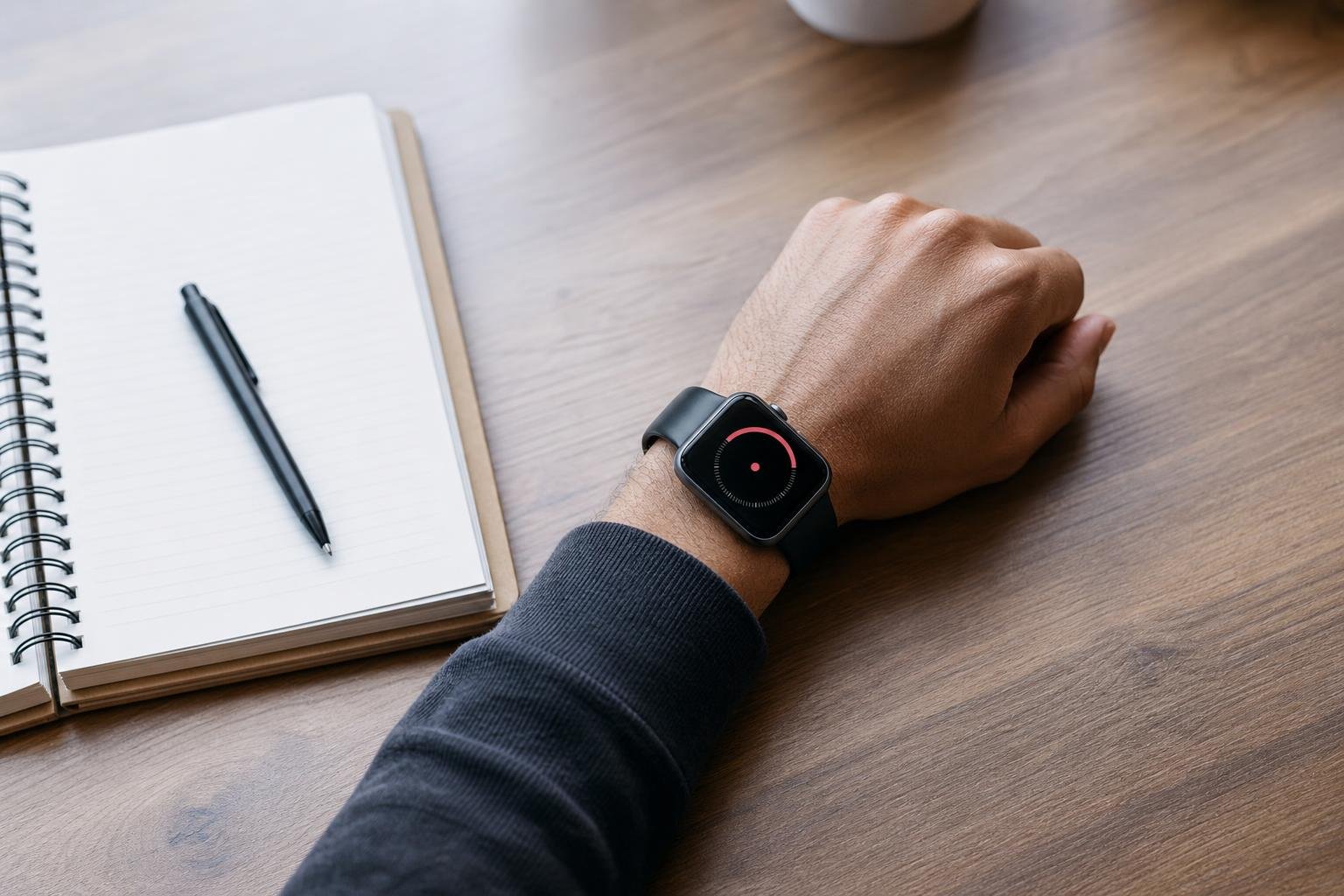
Smartphones can easily derail your efforts when used carelessly. A 2016 study presented at the ACM CHI Conference on Human Factors in Computing Systems demonstrated that smartphone notifications significantly increase inattention and hyperactivity symptoms. If using a timer means unlocking your phone, navigating past social feeds, and managing bright alerts, the tool becomes a source of distraction rather than an aid.
An effective ADHD focus timer minimizes interface friction so you can put the phone down immediately after launching your session. It lives passively in your peripheral awareness rather than demanding your active interaction.
Essential Features to Look For in an ADHD Focus Timer
When evaluating an adhd focus timer app, you need features that address executive dysfunction directly: initiating tasks, maintaining momentum, and reducing interface friction.
Passive Visibility Without Device Unlocking
A reliable timer should display your remaining time without requiring you to unlock your handset. Features like Lock Screen widgets, always-on watch displays, and the iPhone Dynamic Island provide continuous visual cues. You get a steady reminder of your current priority without tempting yourself to open messaging or web apps.
Low-Effort Session Setup
If starting an interval requires selecting complex categories, filling text fields, and adjusting several sliders, task initiation stalls. Look for tools that let you start a session in a single tap. Preserving mental energy for the actual work is critical when handling neurodivergent inertia.
Flexible Work and Rest Periods
While traditional intervals like twenty-five minutes work well for some, ADHD attention varies widely across different days and tasks. Your tool should support adaptive durations, from ten-minute warm-ups to longer blocks of deep work, without guilt-inducing penalties when you modify a cycle.
Comparing Timer Types and Support Strategies
Different focus mechanisms support executive function in unique ways. Some users benefit from visual clocks, while others thrive when combining time blocks with external accountability.
| Timer Approach | Primary Mechanism | Best Suited For | Key Limitation |
|---|---|---|---|
| Peripheral Live Activities | Persistent glanceable countdown on lock screens | Digital deep work, desk tasks | Requires modern device support |
| Classic Pomodoro Timers | Fixed work-break cycles (25m work / 5m rest) | Administrative routine tasks | Can abruptly cut off hyperfocus |
| Body Doubling Workflows | Shared presence alongside peers or digital partners | Overcoming task paralysis | Requires scheduling or internet access |
| Analog Mechanical Dials | Physical color disk that disappears as time passes | Visualizing raw time remaining | Lacks automated tracking data |
The Cleveland Clinic notes that "body doubling"—working alongside someone else in person or digitally—functions as an external executive functioning aid to help individuals with ADHD initiate and sustain attention on tasks. Additionally, a 2025 study on virtual reality interventions published on arXiv found that participants with ADHD completed tasks faster and reported improved sustained attention when working with either a human or an AI body double compared to working alone. Pairing a glanceable timer with external accountability creates a reliable structure for tough working days.
How to Integrate a Focus Timer into Your Daily Routine
Adopting an adhd focus timer app works best when combined with predictable daily rituals. Instead of treating your timer as an emergency fix during panic, incorporate it into standard transition moments across the day.
- Define the immediate next step: Never start an interval on an ambiguous project. Write down a physical action, like "draft two introductory sentences" or "clear downloads folder," before touching the clock.
- Trigger the session and set the screen down: Start your session, confirm that the progress counter is visible in your periphery, and put the phone down away from your direct hand reach.
- Work until the quiet cue: Continue working until your session completes. If you encounter an urge to browse, glance at the timer to ground your sense of time and return to the task.
- Take intentional breaks: Step away from monitors entirely during your rest intervals. Walking or drinking water helps your dopamine receptors refresh faster than scrolling through feeds.
If you prefer frictionless tracking across your devices, our focus timer integrates directly with the Dynamic Island, Lock Screen, and Apple Watch. It ensures you can monitor your time and protect focus without falling into digital rabbit holes.
Building Momentum with Broader Daily Habits
A timer provides the foundation for individual work blocks, but sustaining focus over weeks requires supporting routines. Managing ADHD effectively means connecting your work intervals to your broader lifestyle patterns.
Pairing timer sessions with daily checklists allows you to break recurring obligations into predictable routines. When your tasks, habits, and focus metrics align, you reduce the daily anxiety of wondering what to tackle next. You can also review our guide on how to choose the best focus timer for your daily workflow to identify an approach that matches your personal working rhythm.
Frequently asked questions
Why does a visual focus timer help with ADHD time blindness?
ADHD brains often struggle to perceive the gradual passage of time internally. A visual timer externalizes time into a concrete, observable metric. Seeing a timer tick down on a lock screen or watch face shifts time perception into your direct environment, keeping your priorities present.
Should people with ADHD stick to the standard 25-minute Pomodoro cycle?
Not necessarily. Fixed 25-minute sprints can disrupt neurodivergent hyperfocus, while on other days, 25 minutes feels too daunting to start. Many individuals do better with flexible blocks, such as 15 minutes to overcome inertia or 45 minutes for complex projects.
How can I prevent my phone from distracting me while running a timer?
Use an app with glanceable displays such as Live Activities, lock screen widgets, or watch integrations. This allows you to check your remaining interval time without unlocking your phone, protecting your attention from social feeds and incoming message banners.
Can focus timers be used alongside body doubling techniques?
Yes. Running a focus timer during a co-working session or virtual body-doubling block provides a shared, clear boundary for both participants. It anchors the collective work period and ensures everyone takes scheduled, healthy rest breaks together.
Sources
- Attention-Deficit/Hyperactivity Disorder Diagnosis, Treatment, and Telehealth Use in Adults — National Center for Health
- cdc.gov
- ADHD Timer Online — Free Visual Time-Pacing Tool
- ADHD Time Blindness: How to Manage Time
- Pomodoro and ADHD: Why External Structure Helps | Pomodorian
- Pomodoro for ADHD: External Time Cues | Pomotto
- How Body Doubling Helps With ADHD
- [2509.12153] You Are Not Alone: Designing Body Doubling for ADHD in Virtual Reality
 Download on the App Store